
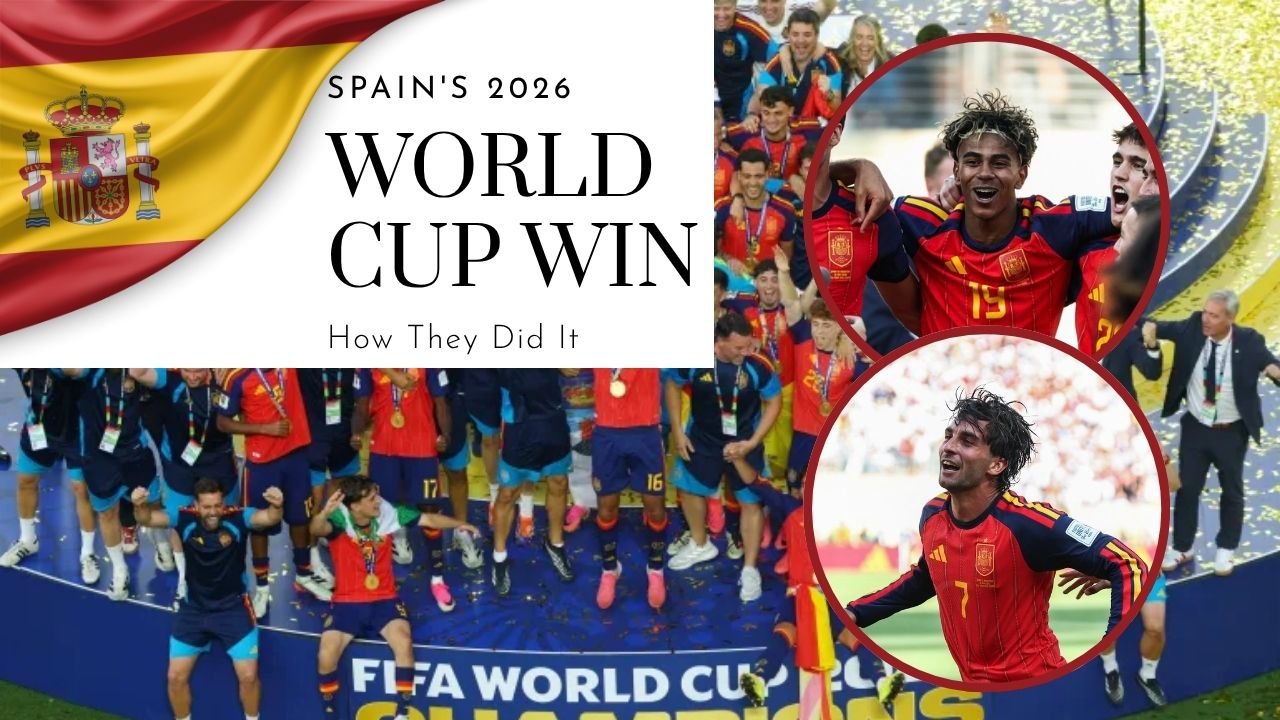
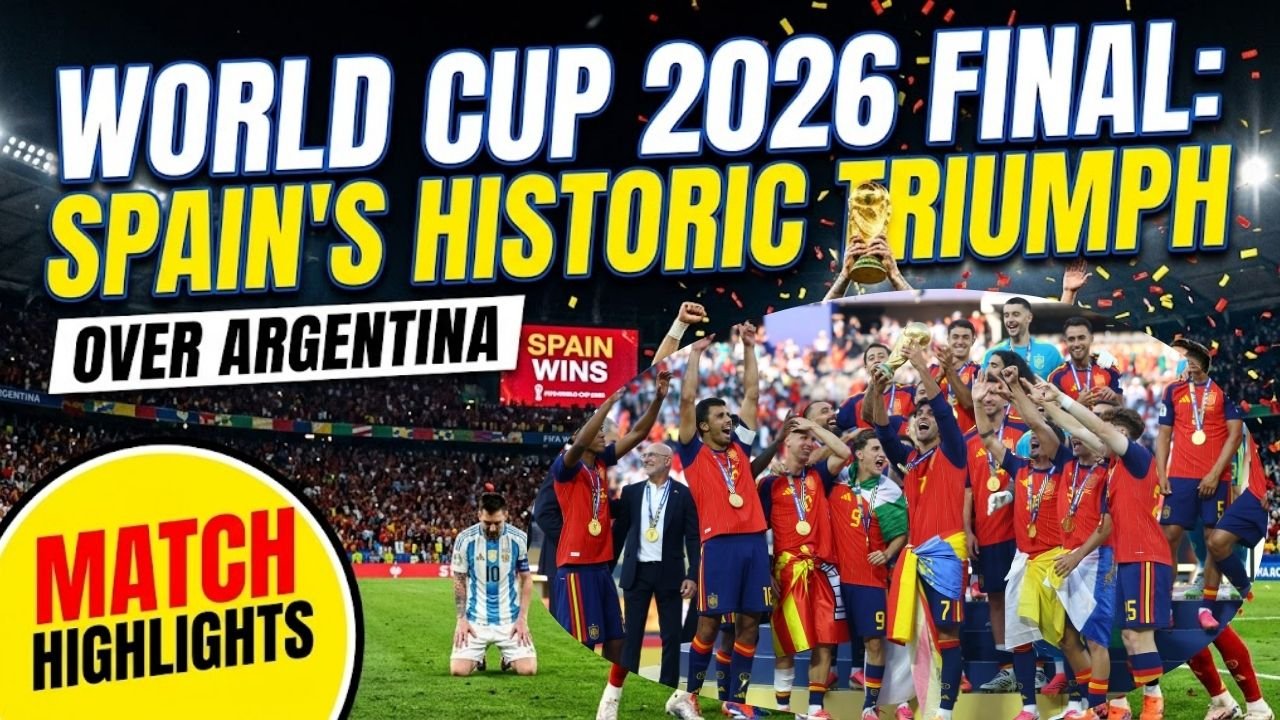
You watched history unfold on July 19, and it was worth every minute. Spain claimed their second World Cup title, and honestly, they made it look inevitable by the end. But if you rewind to the group stage, this story didn’t start so smoothly. Let’s break down exactly how the newly crowned Spain World Cup 2026 winners pulled it off.
A Slow Start, Then Total Domination
You’d never guess Spain almost stumbled out of the gate. They opened their campaign with a sluggish 0-0 draw against Cape Verde, despite controlling the game from start to finish. Not exactly the fireworks you’d expect from a team destined for glory. But you know how these things go — sometimes a team needs one shaky match to find its rhythm. And find it they did.
Goal.com
Once the knockouts began, Spain flipped a switch you couldn’t ignore. They demolished Austria 3-0 in the Round of 32, keeping a clean sheet with room to spare. Then came the emotional stuff. Spain faced neighboring rivals Portugal in the Round of 16, and it turned into one of the tournament’s tightest battles. You could feel the tension through the screen. Substitute Mikel Merino settled it with a stoppage-time winner, sending Spain through 1-0.
The quarterfinal against Belgium tested Spain in a new way. Belgium became the first team all tournament to score against Spain’s defense. That’s right — this backline had been a fortress up until that point. But you can’t win a World Cup without adapting on the fly. Merino came off the bench again, netting the winner late after a Belgium goalkeeping error, sealing a 2-1 win. Two knockout goals off the bench. This guy was quietly becoming Spain’s secret weapon.
Sports Illustrated
Then came the semifinal, where Spain was suddenly the underdog. France arrived with electric pace and looked like the team to beat. You’d expect nerves here, but Spain didn’t blink. A rock-solid defense set the stage for Mikel Oyarzabal and Pedro Porro to strike, giving Spain a commanding 2-0 win. Just like that, they were back in a World Cup final.
Business Standard
Sports Illustrated
Ferran Torres: From the Bench to the History Books
Now let’s talk about the man who actually won it. Ferran Torres wasn’t even starting the final. He came on as a substitute in the 62nd minute against Argentina. You know that feeling when a sub changes everything? This was that moment, times ten.
In the opening minute of the second period of extra time, Torres pounced on a loose ball and buried it left-footed under the crossbar. The stadium erupted. It was his first goal of the entire tournament, and it couldn’t have come at a bigger moment. Torres later summed it up beautifully, calling it a goal scored by 47 million people, referencing Spain’s entire population. You can’t script a better line than that.
The Unbeaten Streak That Built This Moment
Here’s the part that makes this win feel less like luck and more like destiny. This Spain squad went 38 matches without a single loss, a run that includes their 2024 European Championship title. Think about that for a second. You’re talking about years of consistency, not just one hot summer. That kind of streak doesn’t happen by accident.
Spain also became the most defensively dominant champion in World Cup history, conceding just one goal on their way to the trophy. One goal. Across an entire tournament. You almost feel bad for the strikers who had to face them.
What This Means for Spanish Football’s Future
So what happens next for Spain? You’re looking at a golden generation that just added another World Cup star to their trophy case. Young talents like Lamine Yamal and Pau Cubarsi got real World Cup experience, and that’s invaluable. This isn’t a team peaking and fading — it’s a squad building toward the next decade.
If you’re a soccer fan, buckle up. Spain just proved they can win ugly, win pretty, and win from the bench. That’s a scary combination for everyone else.





Comments are closed.