

In Baghdad Messi, director Sahim Omar Kalifa takes us on a journey that transcends the world of sports. The film, set against the harsh realities of post-invasion Iraq, shows how football becomes a beacon of hope, resilience, and determination for an 11-year-old boy named Hamoudi.
More than just a game, football in this story becomes a lifeline that connects Hamoudi to his dreams, his family, and his sense of normalcy amidst chaos.
But how does this film transform football into a symbol of hope, and what makes it so much more than just another sports drama?
The Power of Football in a War-Torn World
Triple features of today
— Zain 4 😉 (@Zab_tract) February 13, 2024
"The Divorcees of Casablanca"
"Baghdad messi"
&
"The Burdened" pic.twitter.com/iTrwBCWIow
Imagine being a young boy, passionate about a sport that brings you joy amidst constant uncertainty. That’s Hamoudi’s reality.
Growing up in a city that’s perpetually in turmoil due to sectarian violence, bombings, and the aftermath of war, football represents more than a mere game for him. It becomes his escape, his way to forget about the explosions in the streets and the looming danger of bombings. Kalifa’s portrayal of Hamoudi’s love for the sport is raw and real.
We see him practicing in the dusty streets, dreaming of playing for Barcelona, and idolizing Messi with a passion only the young can possess. For Hamoudi, the ball isn’t just a ball; it’s a world of possibility.
Football provides him with the freedom to imagine, to dream of a better life. But tragedy strikes when a bomb takes away his leg, shattering his dreams in an instant.
This devastating moment, brilliantly captured by Kalifa, shows just how fragile hope can be in a world ravaged by war. Yet, it’s also in this moment of despair that we begin to see the true power of football: its ability to foster resilience even in the most difficult of circumstances.
Overcoming Adversity: Hamoudi’s Unbreakable Spirit
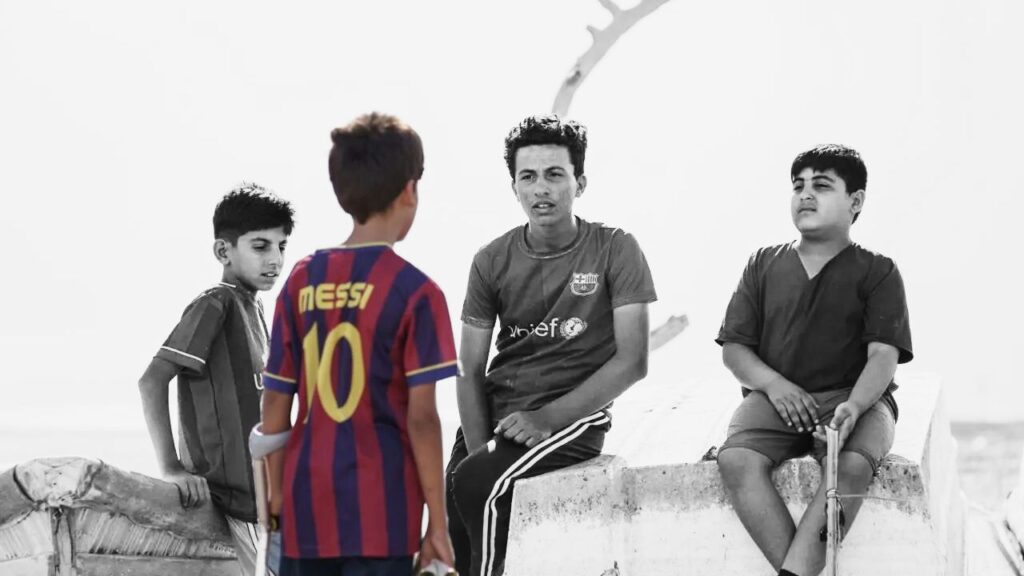
The loss of a leg is a painful blow, both physically and emotionally. For any child, having your dreams ripped away is devastating.
Hamoudi’s journey takes an unexpected turn when he and his family are forced to relocate to a rural village for safety. It’s in this new environment, surrounded by children who don’t welcome him and a world far from the football fields he once knew, that Hamoudi faces his toughest challenge.
But football, as it often does, provides a way forward. Hamoudi’s love for the game never dies, and instead of playing, he adapts. He begins to coach younger kids, passing on his skills and knowledge of the sport.
In doing so, Hamoudi not only helps these kids discover their love for football but also begins to heal. The act of sharing his passion and teaching others becomes his new source of joy and acceptance.
Kalifa uses this beautiful transformation to show that while dreams might change, the spirit to keep moving forward, even after a life-altering event, is what truly defines us.
This shift from playing to coaching illustrates the power of community and solidarity.
Hamoudi’s journey from despair to resilience offers a message that is universally understood: no matter what life takes from you, you can always find a way to keep going, as long as you hold onto the things that matter most.
And for Hamoudi, football becomes his bridge to a new sense of purpose.
The Heartfelt Performance and the True Spirit of Baghdad Messi
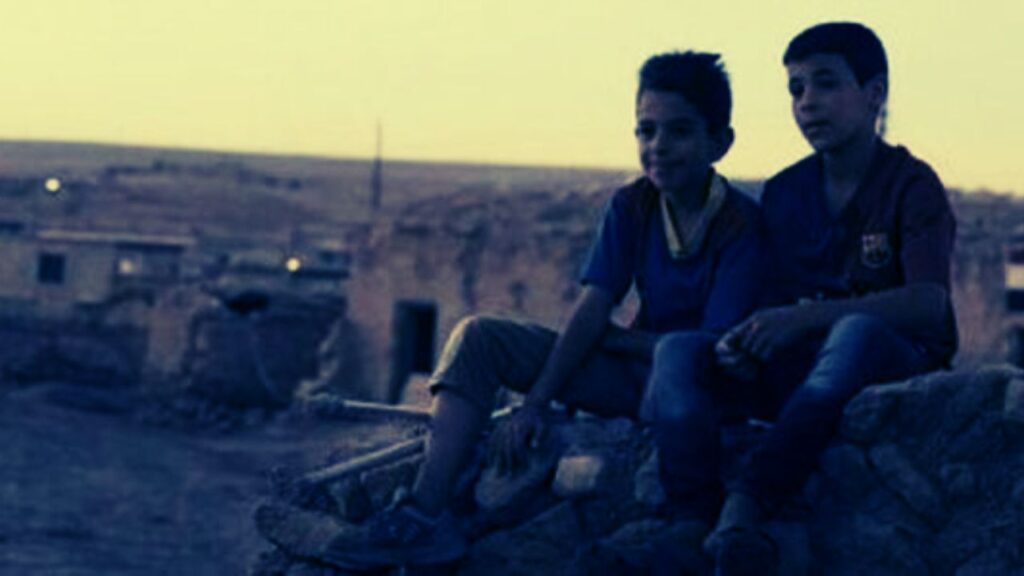
At the heart of Baghdad Messi is the character of Hamoudi, played by Ahmed Mohammed Abdullah. His performance carries an authenticity that deeply resonates with the film’s message of resilience.
Abdullah himself has lived through a similar trauma, having lost his leg due to a missile strike at a young age. This real-life experience adds layers of depth to his portrayal, making Hamoudi’s journey feel deeply personal and raw.
His sincere and heartfelt performance earned him the Best Actor Award at the Duhok International Film Festival, and rightly so.
Through Abdullah’s portrayal, we understand that Baghdad Messi isn’t just about football; it’s about the unyielding strength of the human spirit.
The film also explores the complex dynamics of Hamoudi’s family—particularly the differing ways his parents cope with his trauma.
His mother, Salwa, urges him to move on and find new passions, while his father, Kadhim, clings to the hope that Hamoudi can still achieve his football dreams. This emotional tug-of-war creates a rich emotional layer, making the film feel incredibly grounded and relatable.
A Message of Hope for Us All

At its core, Baghdad Messi is a story about the resilience of the human spirit. Despite the tragic loss of his leg, Hamoudi’s journey is one of determination, adaptability, and strength.
He finds new ways to connect with the world around him, proving that even when your dreams are crushed, there are always ways to rebuild them.
This film is a powerful reminder that in the face of adversity, hope can always find a way to shine through. Football may have been Hamoudi’s escape, but his journey teaches us that hope isn’t confined to any one dream.
It’s about the strength to pick yourself up, learn from your experiences, and keep moving forward. Whether through sports or something else, Baghdad Messi beautifully captures how resilience can become a powerful force, even in the darkest times.






Comments are closed.